How Divorce Affects Your Finances and How to Prepare
When you go through a divorce, it changes more than just your relationship status; it can also reshape your financial life. From managing household budgets and taxes to handling retirement accounts and estate plans, you need careful planning and clear decisions. If you're starting this journey, understanding the financial consequences early can help you avoid costly mistakes and protect your long-term stability.
This guide breaks down the key ways divorce affects finances, what recent trends mean for families today, and practical steps you can take to prepare. We'll also discuss where legal guidance can help, especially when you need assistance from a trusted divorce law team or support with broader family transitions through family law. For more on divorce statistics and related financial trends, the U.S. Census Bureau offers helpful national data on marriage and divorce patterns at census.gov.
Why Divorce Has Such a Big Financial Impact
One Household Becomes Two
The biggest financial change in divorce is straightforward: one shared household often becomes two separate households. That means double the housing costs, utility bills, groceries, transportation expenses, and insurance premiums. Even if your income stays the same, maintaining two separate lives can put immediate pressure on your cash flow. This is why many people feel financially stretched soon after filing.
Shared expenses also become more complicated when kids are involved. Child-related costs, extracurricular activities, school needs, and health coverage might need to be divided or reallocated, and disagreements about who pays for what can quickly create tension. Having a clear plan early can reduce conflict and make budgeting easier.
Assets and Debts Must Be Divided
Divorce doesn't just separate people; it also separates property, debt, and financial responsibility. Bank accounts, investment accounts, retirement savings, vehicles, real estate, and personal property all may need to be evaluated. Debts, including mortgages, credit cards, medical bills, and loans, must also be sorted out so both parties understand what is being divided.
A comprehensive financial assessment is the foundation of fair division. As noted by financial experts in Forbes, people often underestimate the importance of gathering complete financial information before negotiations begin. If you're unsure where to start, legal support and document organization through legal resources can help you collect the information needed for informed decisions.
Current Divorce Trends and What They Mean for Your Finances
Gray Divorce is Rising
One of the most important trends in family law is the rise of gray divorce, which refers to divorces among adults aged 50 and older. By 2026, adults over 50 are projected to account for 36% of all divorces, up from 28% in 2020. This matters because later-life divorce often occurs when retirement savings, healthcare planning, and fixed incomes are already crucial concerns. The financial stakes can therefore be much higher than they are for younger couples.
Gray divorce can affect everything from pension division to Social Security timing and estate planning. When a long marriage ends, there's often less time to rebuild assets before retirement, making careful planning especially important for anyone in midlife or later considering separation or divorce.
Online Divorce Services are Growing
Another major development is the rise of online divorce platforms. Projections suggest these services might handle 25% of uncontested divorces by 2026, up from 18% in 2024. While online services can be useful in simple, low-conflict cases, they aren't always enough when finances are complex, children are involved, or real estate and retirement assets must be divided. In those situations, a more tailored legal strategy is usually needed.
If you're evaluating whether your case is simple enough for a streamlined process, it's wise to compare the risks against the long-term financial consequences. Guidance from an experienced attorney and a careful review of your situation can help you determine whether a simple process is truly in your best interest.
How Divorce Changes Your Budget
Housing Becomes the Biggest Pressure Point
For most families, housing is the first major budget change. One spouse might move into a rental property, while the other stays in the marital home or sells it. In either scenario, housing costs can become much more expensive on a per-person basis. Mortgage payments, rent, property taxes, insurance, and maintenance costs all need to be reconsidered within a post-divorce budget.
If the marital home is retained by one spouse, it's important to assess whether that person can afford the full carrying cost. A home that seemed manageable on two incomes may become unsustainable on one. This is why decisions about real estate should be made with a full picture of monthly expenses and future earning ability. In some cases, issues involving property ownership may also overlap with real estate law concerns, especially when title, refinancing, or sale terms are disputed.
Daily Living Costs Increase After Separation
Once the household splits, ordinary expenses often increase. Food, gas, childcare, subscriptions, utilities, and personal expenses no longer benefit from the shared scale. People are often surprised by how quickly the costs of separate living add up. Even discretionary spending might need to be reduced while the new financial reality settles in.
This is why creating a detailed post-divorce budget is one of the smartest steps you can take. A budget should include fixed costs, variable costs, emergency savings goals, debt payments, and legal expenses. By mapping everything out early, you can make better decisions about settlement offers and settlement timing.
What Happens to Retirement Savings, Pensions, and Investments
Retirement Accounts Require Special Handling
Retirement savings are often among the most valuable assets in a divorce. These accounts might include 401(k)s, IRAs, pensions, and other employer-sponsored benefits. Dividing them requires special care because mistakes can lead to tax penalties or unintended losses. For many people, retirement assets represent the largest long-term source of financial security, so protecting them is critical.
For certain retirement accounts, a Qualified Domestic Relations Order, or QDRO, is necessary to divide the funds properly. Kiplinger explains that a QDRO helps transfer retirement assets without triggering unnecessary tax consequences in many situations, making it a key tool in divorce planning. You can read more about that process at Kiplinger. Because retirement division can be highly technical, it is often wise to address these issues early with legal counsel and with help from a careful review of your broader estate plan through wills and trusts.
Pensions and Future Income Streams Matter Too
Many divorcing spouses focus only on current account balances, but future income streams are equally important. Pensions, deferred compensation, stock options, and retirement benefits can all affect the fairness of a settlement. A spouse who seems to have fewer liquid assets may still hold substantial future value through a pension or retirement benefit.
That's why a complete financial assessment should include both present and future value. In some cases, a negotiated tradeoff may be appropriate, such as one spouse keeping more home equity while the other receives a larger share of retirement assets. The right balance depends on age, income, tax consequences, and long-term needs.
Taxes, Spousal Support, and Other Hidden Costs
Tax Filing Status and Deductions Change
Divorce can alter your tax filing status, deductions, and credits. Depending on when the divorce is finalized, you might file as single or head of household rather than married filing jointly. That shift can affect your tax bracket and your eligibility for child-related tax benefits. Spouses should be aware that timing can influence the size of their tax bill.
Because tax issues can become complicated quickly, it's best to understand the implications before finalizing any agreement. The IRS provides official guidance on filing status, dependents, and alimony-related tax rules at irs.gov. Reviewing tax consequences before signing can help you avoid surprises and make better choices during settlement discussions.
Spousal Support May Affect Both Sides Differently
Spousal support, also known as alimony, can have a major impact on both parties’ finances. The paying spouse must account for the monthly obligation in their budget, while the receiving spouse may rely on it as a temporary or long-term source of income. Support amounts often depend on earning capacity, length of marriage, standard of living, and other statutory factors.
Because support can intersect with tax planning, cash flow, and long-term independence, it should be analyzed alongside property division rather than in isolation. A settlement that looks fair on paper may still create hardship if support payments, debt obligations, or housing costs are not realistically sustainable.
How Divorce Affects Children and Family Finances
Child-Related Costs Must Be Planned Carefully
When children are involved, divorce often creates new financial obligations related to child support, medical insurance, education, and extracurricular activities. These costs can be easy to overlook during emotionally charged negotiations, but they are among the most important items to plan for. Parents should think not just about today’s expenses but also about future needs as children grow.
Clear parenting arrangements also help reduce financial conflict. For readers looking for more insight on parenting transitions, our article on co-parenting after divorce provides practical strategies for keeping routines stable while protecting children’s well-being. If custody concerns become contentious, a focused child custody law strategy can help clarify responsibilities and reduce uncertainty.
Support Disagreements Can Create Long-Term Strain
Even when parents agree to the basics, support disputes can continue after the divorce is finalized. Unexpected school costs, medical bills, and activity fees often lead to tension if the settlement language is unclear. A good agreement should address ordinary recurring expenses as well as extraordinary or unexpected costs, so both parents know what to expect.
Families benefit when support arrangements are detailed, realistic, and easy to administer. This is especially true when children have special needs, complicated schedules, or changing educational requirements. The more clarity you build into the plan, the fewer financial disputes you are likely to face later.
Preparing Financially Before You File
Gather Every Important Financial Document
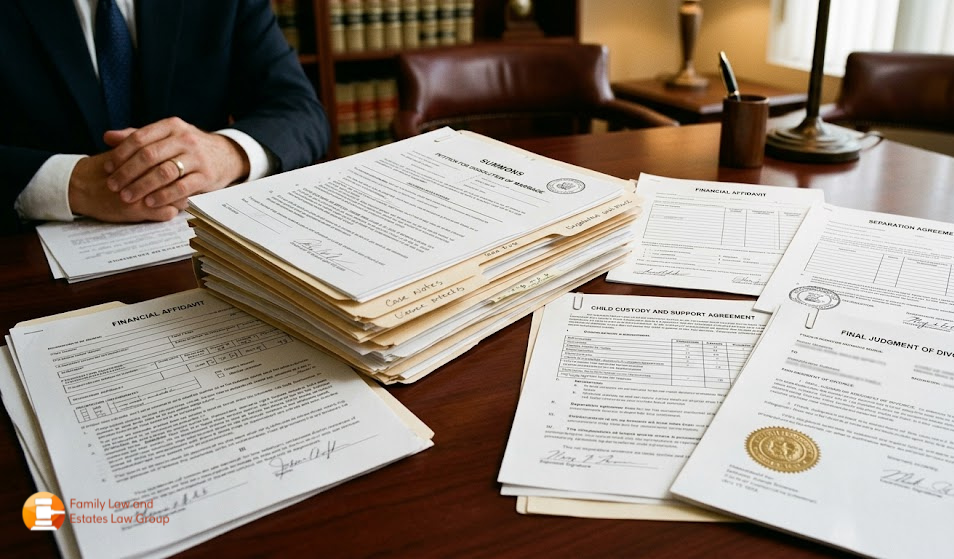
Preparation begins with documentation. Before filing, collect recent tax returns, pay stubs, bank statements, mortgage records, retirement account statements, credit card bills, insurance policies, loan documents, and business records if applicable. You should also gather records related to benefits, stock compensation, and any other assets that may not appear in a simple bank summary.
The goal is to build a full picture of your financial life so you can evaluate settlement options intelligently. Missing documents can delay negotiations or lead to unfair assumptions about what you own and owe. If you need help organizing this information, a family law attorney can guide you through the process and help you identify what matters most.
Create a Realistic Post-Divorce Budget
A post-divorce budget should reflect your true expenses after separation, not your old shared household costs. Include rent or mortgage, utilities, insurance, transportation, debt payments, child-care, medical expenses, groceries, and legal fees. Then compare those expenses to your likely post-divorce income, including wages, support, investment income, or benefits.
This exercise can reveal whether you need to negotiate for a greater share of assets, lower debt responsibility, or a different support structure. It also helps you identify places where you may need to trim spending temporarily while rebuilding financial stability. A budget is not just a spreadsheet; it is a roadmap for the next stage of your life.
Update Your Estate Plan Early
Many people forget that divorce affects estate planning, but beneficiary designations and inheritance documents can create major problems if left unchanged. Wills, trusts, powers of attorney, retirement beneficiaries, and life insurance forms should all be reviewed after separation. Otherwise, an ex-spouse may remain listed as a beneficiary even when that is no longer your intention.
For that reason, estate planning should be part of every divorce strategy. Our wills and trusts services can help you update these documents so your plan reflects your current wishes. If the divorce raises issues about who can manage finances or make decisions in the future, you may also need to evaluate conservatorship law for added protection in appropriate cases.
A Real-World Example of Gray Divorce Finances
When Retirement Plans Must Be Redesigned
Consider a couple in their early 60s who divorce after a 30-year marriage. They may own a home, have accumulated retirement savings, and rely on a fixed income or limited earning capacity. Once the household splits, both spouses may face rising expenses and a narrower margin for error. What once supported one shared life must now fund two separate futures.
In this situation, the spouse who leaves the workforce or works part-time may be especially vulnerable. In fact, research cited by Forbes reports that women over 50 who divorce can experience a 45% drop in standard of living, while men in the same group see a 21% decline. These numbers highlight why later-life divorce requires more than emotional preparation; it requires strategic financial planning.
How a Thoughtful Settlement Can Help
A strong settlement in a gray divorce often balances income needs, asset division, tax treatment, and retirement security. One spouse may receive more home equity while the other retains a larger retirement share. Or the home may be sold so both parties can reset with more manageable expenses. The right solution depends on the family’s goals, not just a formula.
This is where experienced legal guidance matters. With careful negotiation, it may be possible to reduce unnecessary financial loss and protect long-term stability. Families navigating complex transitions often benefit from a coordinated approach that includes divorce counsel, estate planning, and practical financial planning, all working together.
When to Seek Legal Help
Complex Assets and Disputes Need More Than a Basic Form
If your divorce involves real estate, retirement accounts, a family business, or significant debt, professional legal help can make a substantial difference. These issues often require careful analysis, court filings, and precise language to prevent future disputes. A generic form or online template may not be enough when the financial picture is complicated.
Experienced representation is especially useful when one spouse controls most of the financial records or when you suspect assets are being hidden. A lawyer can help identify information gaps, preserve your rights, and work toward a fair result. In some cases, a broader family law strategy may also be needed to address parenting issues, support disputes, or related matters.
Local Support Can Make the Process Easier
If you're looking for legal guidance in Southern California, having a knowledgeable attorney familiar with California divorce law can save time and reduce uncertainty. For individuals and families seeking support in Glendale and nearby communities, Family Law and Estates Law Group, P.C. offers experienced help with divorce, custody, support, and estate planning concerns. Local knowledge can be especially valuable when rules, courts, and timelines affect strategy.
Readers in the region may also benefit from connecting with related legal support in nearby communities such as Burbank or Los Angeles when local circumstances or convenience matter. No matter where you live, the earlier you seek advice, the more options you may have.
Frequently Asked Questions About Divorce and Finances
Will Divorce Ruin My Financial Future?
Not necessarily. Divorce is often expensive and disruptive, but it doesn't have to permanently damage your financial future. With a realistic budget, careful settlement planning, and sound legal guidance, many people recover and rebuild stronger financial habits. The earlier you prepare, the better your odds of protecting savings and reducing unnecessary losses.
What Should I Do First If I Am Considering Divorce?
Start by collecting financial records, opening a separate account if appropriate, and making a detailed list of assets, debts, and monthly expenses. Then speak with a family law attorney who can help you understand your options and the likely financial impact. If custody, support, or property issues are already emerging, early guidance can prevent mistakes that are hard to undo later.
Can I Keep My House After Divorce?
Possibly, but only if it's financially sustainable. You should look at your income, debt obligations, mortgage terms, taxes, insurance, and maintenance costs before deciding. Keeping the home may be emotionally meaningful, but it should still make sense as part of your long-term budget. If it doesn't, selling or refinancing may be the more practical choice.
How Do I Protect My Retirement Savings?
Retirement savings should be reviewed carefully during settlement negotiations, and any division should be documented correctly. In many cases, a QDRO is essential for certain retirement accounts. Because mistakes can be costly, make sure retirement assets are addressed before final orders are entered.
Take the Next Step Toward Financial Stability
Divorce affects nearly every part of your financial life, but with preparation, the transition can be managed thoughtfully. By understanding how property division, debt, taxes, retirement savings, and support obligations work together, you can make informed decisions that support your long-term security. The key is not to wait until the end of the process to think about money; finances should be part of your divorce strategy from the beginning.
If you're facing divorce or considering your options, you don't have to handle the financial side alone. Family Law and Estates Law Group, P.C. provides compassionate, knowledgeable support for individuals and families navigating divorce, asset division, and related estate planning concerns. To discuss your situation and learn how to protect your future, contact our office at (818) 996-6563 or visit familylawglendale.com to get started.